
Sonic Rumble Party
SEGA CORPORATIONAction
4.32.49K Reviews
- Version
- 1.6.2
- Installs
- 10.00M
- Age Rating
- Everyone
Screenshots
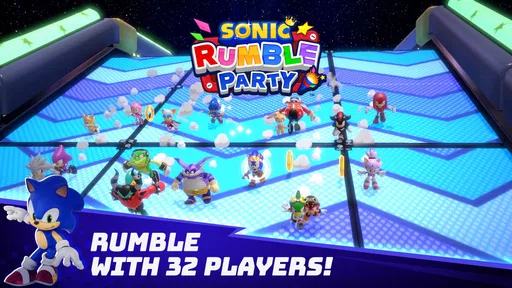
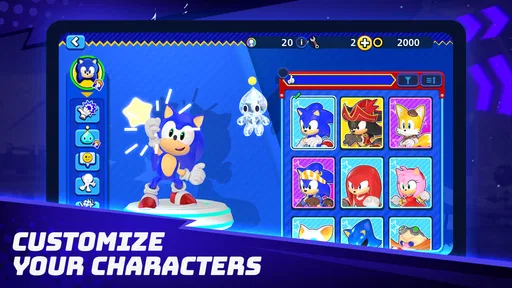
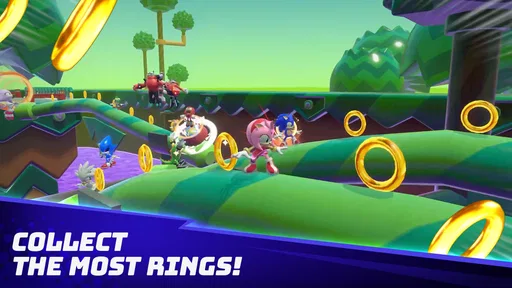
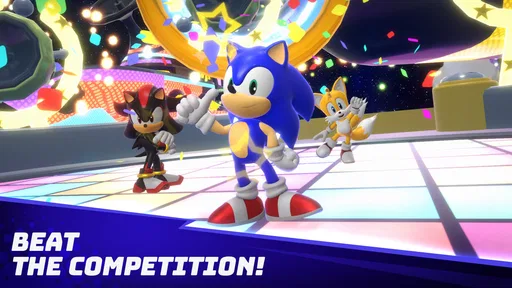
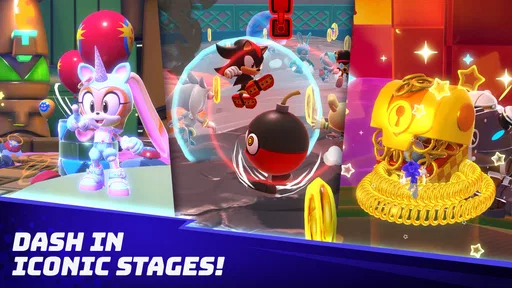
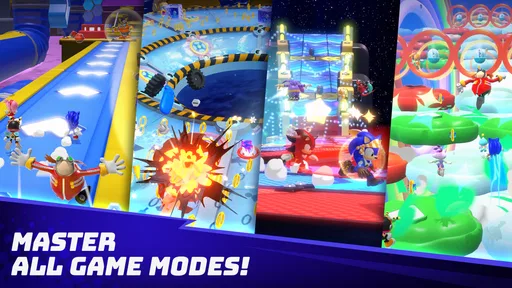

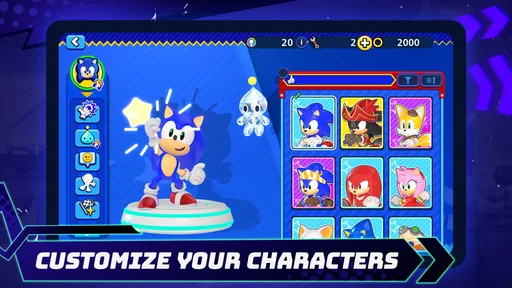
Our Review of Sonic Rumble Party
 Analysis by Appyee
I went into Sonic Rumble Party expecting a quick Sonic-themed distraction, but I found something more specific: a lively action party game built around short bursts of movement, messy competition, and the pleasure of watching familiar characters cause trouble together. That focus is both its biggest strength and its main limitation. It is easy to pick up when I want a few energetic minutes, yet it does not aim to replace a deep platformer or a carefully structured solo adventure.
The game comes from SEGA CORPORATION and is free to download, with optional purchases ranging from $0.29 to $99.99 per item. Its broad appeal is clear from its 4.3 average rating and more than 10 million installs. Those figures suggest that the concept has reached a large audience, but they do not change the practical question I would ask before installing it: do you enjoy fast, unpredictable party matches more than precise, traditional Sonic level design?
Why the party format works so well
The most enjoyable part of Sonic Rumble Party is the way it turns Sonic’s world into a shared playground rather than a straightforward race from left to right. I like that shift because it gives the characters room to feel playful and slightly chaotic. Instead of treating speed as the only measure of success, the game’s appeal comes from reacting quickly, recovering from mistakes, and staying engaged when the action becomes crowded.
That makes it a good fit for the small gaps in a normal day. I can imagine opening it while waiting for a friend, playing during a short commute, or using it as a low-commitment break after work. It does not require the same quiet concentration as a longer story game. The colorful presentation and recognizable Sonic identity also make it easier to introduce to someone who may not usually choose an action game.
The real strength is its social energy rather than technical mastery. A perfectly controlled run can be satisfying, but an unexpected collision or sudden change in position creates the moments I remember. This is the kind of game where a match can feel entertaining even when I do not finish first, because the route to the result is full of small reversals.
That distinction matters when comparing it with the usual alternatives. A classic Sonic platformer generally rewards learning level layouts, maintaining momentum, and improving a personal route. Sonic Rumble Party is better when I want interaction and surprise. A conventional racing game may offer cleaner competition and more predictable rules, while this game leans into disorder. A fighting game usually asks me to study attacks and matchups; here, the satisfaction is more immediate and movement-focused.
A useful game for short sessions
I would not approach this as a title that needs a long uninterrupted evening. Its natural rhythm suits players who prefer repeated, compact sessions. That also makes it approachable for younger players and casual mobile users, especially since the content rating is Everyone. The controls and visual language are less intimidating than those of a more serious competitive action game.
There is a practical advantage to this format: I can stop after a brief session without feeling that I have abandoned a complicated story. That makes it a sensible choice for a shared device or for someone who plays mostly on a phone. It is also easier to return to after several days away because the central pleasure is immediate movement and competition, not remembering a large plot or a long list of objectives.
My advice is to treat each session as a handful of playful attempts, not as a test of endurance. If I start chasing a perfect result every time, the randomness becomes frustrating. If I accept that the fun comes partly from adapting to whatever happens, the game feels much more generous.
Where Sonic’s identity helps
The Sonic setting gives the game an instant personality. Even when the action is busy, the characters, colors, and sense of speed make it feel distinct from a generic party title. I do not need a detailed knowledge of every Sonic release to understand what is happening, but fans will likely get extra enjoyment from seeing familiar faces placed in a more playful competitive context.
That familiarity is especially useful when playing with friends or family. A person who recognizes Sonic may be willing to try this before trying an unfamiliar multiplayer action game. It creates an easy conversation starter: one player can focus on winning while another simply enjoys the cast and the spectacle.
At the same time, the Sonic name can create expectations the game does not always satisfy. If what I want is the precise flow of a traditional 2D adventure, this is not a substitute. The party structure changes the emphasis from mastering a carefully authored route to surviving a more social and unpredictable contest.
What requires patience after the first excitement
The same chaos that makes the game entertaining can reduce the feeling of control. I enjoy reacting to a crowded situation, but I also want my decisions to matter. When several players or hazards affect the action at once, a mistake may feel less like a clear lesson and more like bad timing. That can be amusing in a group and irritating when I am trying to improve seriously.
This is the most important limitation for experienced action players. Someone who prefers exact inputs, transparent systems, and a strong sense of personal responsibility may find the party format too loose. The game is not at its best when I judge it by the standards of a precision platformer. It works better when I see it as an animated contest where recovery and improvisation are part of the challenge.
There is also a natural risk of repetition. A short-session game needs variety in its situations and a reason to return. If the basic movement and competitive loop do not keep me interested, the Sonic presentation alone may not be enough for long-term play. I recommend paying attention to how much enjoyment comes from the actual matches, rather than assuming the character branding will carry the experience indefinitely.
The free entry point is convenient, but the in-app purchase range deserves a measured approach. I would install it first and decide whether the core experience is satisfying before spending anything. The presence of optional items can be harmless for a careful player, yet anyone managing a child’s device should review purchase settings and establish expectations in advance. A free download is not the same thing as a completely cost-free experience.
Three habits that improve the experience
My first practical tip is to use early matches as observation time. Instead of immediately trying to win through speed, I watch how the crowd moves and notice where recovery is possible. In a chaotic game, knowing how to regain position can be more valuable than taking every risky shortcut. This mindset reduces the frustration of being knocked away from the front.
Second, I avoid judging a session by one unlucky result. Party games naturally produce swings, and a single collision can change the outcome. I find the experience more enjoyable when I look for repeatable decisions: choosing a safer line, reacting sooner, or keeping enough space to respond. That turns apparent randomness into something I can gradually manage.
Third, I keep the game in the role it is designed to fill. It works well as a social action break, but I would not use it as my only mobile game if I wanted a long narrative, deep character development, or a demanding solo campaign. Pairing it with a traditional platformer or a more deliberate strategy game gives me variety and prevents the quick-match structure from feeling overused.
These habits also clarify who should skip it. If you dislike competition with unpredictable outcomes, prefer offline progression, or want every defeat to reveal a precise mechanical error, this may not be the right choice. A traditional Sonic adventure is a better option for route learning and personal mastery. A more structured racer is preferable if you want cleaner laps and fewer interruptions. Sonic Rumble Party earns its place when the appeal is shared disorder.
Everyday scenarios where it fits
Picture a short evening at home when two people want something interactive but do not want to learn a complicated game. This is where I would suggest trying it. The Sonic theme lowers the barrier to entry, and the party focus gives both players something to react to immediately. It can also work during a family break, provided everyone understands that the result may be influenced by hectic moments rather than pure precision.
Another good situation is a brief solo break between tasks. I can play a little, put the phone down, and return later without needing to reconstruct a story. That convenience is more valuable than it sounds. Many mobile games ask for extended attention or constant planning; this one makes more sense when I want a compact burst of action.
I would be more cautious about recommending it for a long flight or a place with unreliable connectivity unless I already knew exactly how it behaved in that situation. Its identity is tied to online party play, so I would choose a proven offline game when uninterrupted access is essential. That is not a criticism of the concept; it is simply a matter of matching the game to the setting.
Who should download it
Sonic fans are the obvious audience, but they are not the only ones. I would recommend it to players who enjoy colorful action, quick competitive rounds, and the unpredictable stories that emerge when several participants share a busy space. It is also a reasonable first multiplayer action game for someone who finds more technical titles intimidating.
Parents and younger players may appreciate the Everyone rating, although I would still take the purchase system seriously. The game is free to start, but the available purchases mean that family devices should have sensible spending controls. For a child, the best experience will come from treating the game as entertainment rather than as a reason to chase every optional item.
More demanding players should try it with realistic expectations. If you want a competitive game where every frame, route, or matchup can be studied, you may prefer a specialist title. If you want Sonic’s speed without the pressure of online competition, a traditional platforming release will probably suit you better. This game is for people who value lively interaction over absolute control.
The current version is 1.6.2, and the minimum requirement is Android 8.0. That makes it accessible to many Android users, though I would still check that the device has enough free space and performs comfortably with fast on-screen action before committing to regular play. Smooth control matters more here than it would in a turn-based game, because hesitation can turn a recoverable mistake into a lost opportunity.
One detail I appreciate is that its presentation makes it easy to understand the intended mood. This is not a grim action game or a slow tactical experience. It wants to be bright, quick, and a little unruly. When I approach it with that expectation, its rough edges feel more manageable. When I expect a serious competitive platformer, the same qualities become weaknesses.
My recommendation after spending time with it
I would recommend downloading Sonic Rumble Party if you want a free Sonic-centered action game for short, social sessions. Its strongest moments come from movement, recognizable characters, and the unpredictable exchanges that happen when a simple contest becomes crowded. It is particularly appealing for casual players who want to join in quickly instead of studying a large system first.
I would not recommend it as the main choice for someone seeking a deep solo adventure or perfectly controlled platforming. The online party format brings energy, but it also brings uneven outcomes and the possibility that a loss will not feel entirely self-inflicted. That trade-off is central to the experience, not a minor flaw to overlook.
For me, the clearest way to enjoy it is to keep expectations modest and specific: open it for a burst of Sonic-flavored competition, play with friends when possible, and resist spending until the basic loop has proved its value. The large player reach and solid 4.3 average rating make it easy to understand why people are curious, but the final decision should come down to your tolerance for chaos.
In the end, SEGA CORPORATION has made a game that is more about shared momentum than perfect runs. If you want a playful online action party rather than a conventional Sonic platformer, it is worth trying for free. Just remember that its charm depends on enjoying the mess as much as the movement. For the right audience, that mess is exactly what makes each short session feel alive.
Verdict
Strengths of Sonic Rumble Party
- Fast, chaotic matches are easy to pick up and enjoy.
- Recognizable Sonic characters add charm for longtime fans.
- Short rounds fit well into quick mobile gaming sessions.
- Colorful stages and lively animations keep matches entertaining.
- Multiplayer competition gives the game strong replay value.
Limitations of Sonic Rumble Party
- Online matches can feel frustrating when connection quality drops.
- Random events may make some victories feel less skill-based.
- Progression can become repetitive after extended play sessions.
- Busy stages may be difficult to read on smaller screens.
- Some content may require patience, purchases, or repeated grinding.
Other Releases by SEGA CORPORATION
View All
HATSUNE MIKU: COLORFUL STAGE!
Music4.5

P5X | Persona5: The Phantom X
Role Playing4.3

FIST OF THE NORTH STAR
Action4.6
Similar Picks in This Category
View All
Temple Run 2: Endless Escape
Imangi Studios4.1

PUBG MOBILE
Level Infinite4.3

Free Fire: 9th Anniversary
GARENA INTERNATIONAL I4.4

Talking Tom: Hero Dash Run
Outfit7 Limited4.3

slither.io
Lowtech Studios3.9

Sniper 3D:Gun Shooting Games
Wildlife Studios4.6
Frequently Asked Questions
What is Sonic Rumble Party?
Sonic Rumble Party is a fast-paced multiplayer party game built around the Sonic the Hedgehog universe. Players compete in short, colorful challenges that combine racing, obstacle courses, survival sections, and item-based chaos. The focus is on quick matches, simple controls, and playful competition rather than a traditional story campaign, making it suitable for short gaming sessions with friends or other online players.
Can I play Sonic Rumble Party with friends?
Yes, multiplayer is one of the main reasons to play Sonic Rumble Party. Depending on the available mode and platform version, you can join matches with friends or be paired with other players online. Before downloading, it is worth checking whether your friends use compatible devices and whether the game requires an internet connection, an account, or additional permissions for online features.
Is Sonic Rumble Party free to download and play?
Sonic Rumble Party may be available as a free download, but players should expect optional in-app purchases or other monetization features. These can include cosmetic items, character-related content, seasonal rewards, or premium progression benefits. The core experience may be accessible without spending money, although some content and progression options can require patience or purchases, depending on the current version.
What devices and connection does Sonic Rumble Party require?
The game is designed for modern Android and iOS devices, but compatibility can vary according to the operating system version, available storage, and hardware performance. Because matches are multiplayer-focused, a stable internet connection is generally necessary for online play. Older phones may experience longer loading times, reduced visual quality, battery drain, or occasional performance issues during busy matches.
Is Sonic Rumble Party suitable for children?
Sonic Rumble Party uses bright cartoon visuals and accessible gameplay, so it can appeal to younger players as well as adults who enjoy casual multiplayer games. However, parents should review the age rating, chat and social features, advertising, and in-app purchase settings before allowing children to play. Online interaction and competitive elements may also require supervision, especially for younger users.
Play our best games!


